If your teenager needs orthodontic treatment and the thought of metal brackets has them groaning, you’re not alone. Many families ask the same question: is Invisalign for Teens really a good option, and what should parents know before saying yes? The short answer is that Invisalign can be a solid fit for many teens, but there are a few things worth understanding first.
Below, you’ll find a parent-friendly guide to how Invisalign works for teens, how it compares to traditional braces, and how to tell if your child is a good candidate. Think of this as the starting point for a bigger conversation, one that helps you feel prepared before your teen ever sits in the orthodontic chair.
What Is Invisalign for Teens?
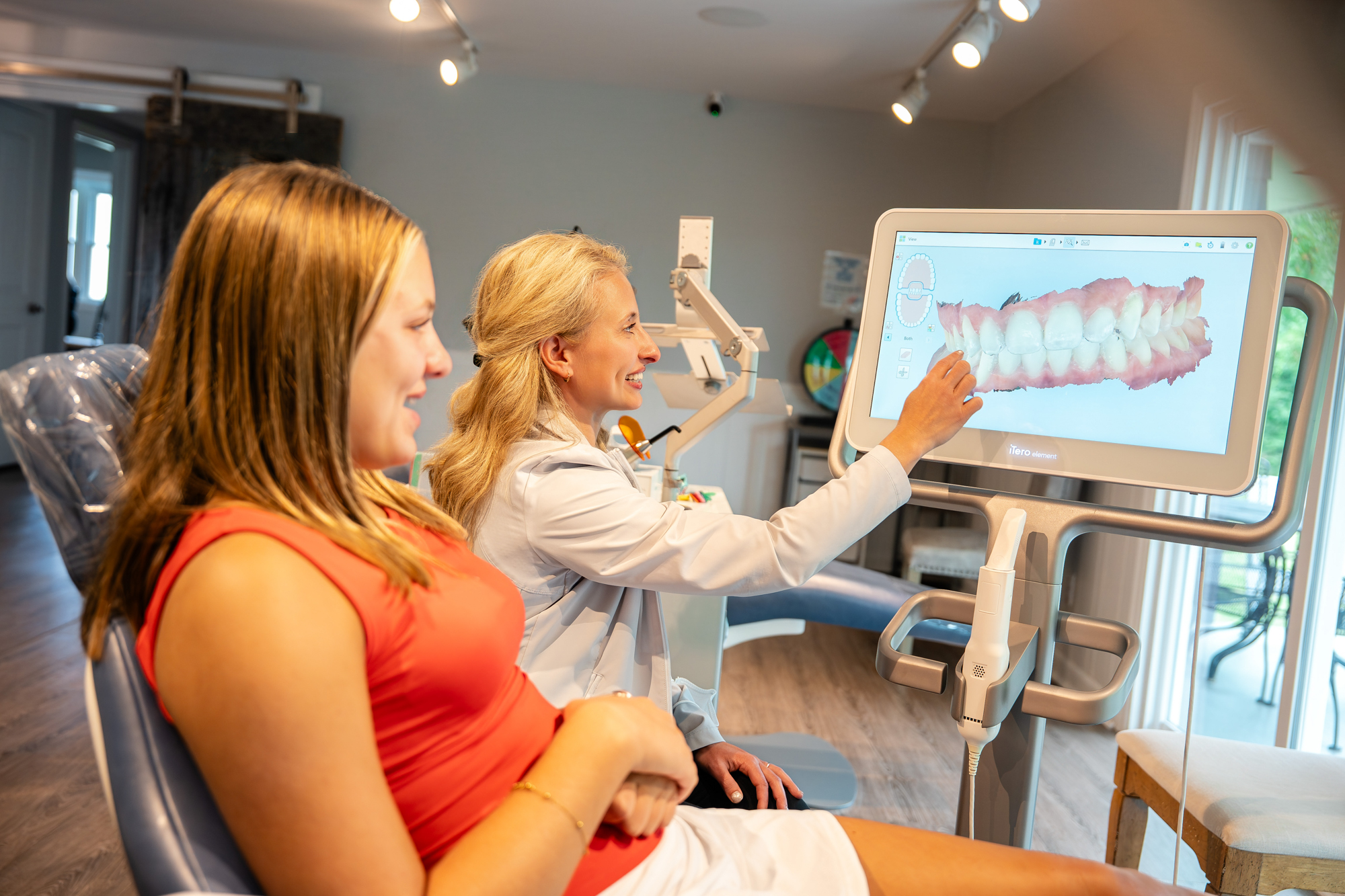
Invisalign for teens uses a clear, removable aligner system designed for teenage patients. The aligners are custom-made from a digital 3D scan.
The result is a treatment option that fits real teenage life, with sports practice, lunch trays, braces-unfriendly snacks, and the occasional lost aligner all accounted for. Parents often appreciate that the system was built around how teenagers actually live, not around some idealized version of a perfectly responsible kid.
How Invisalign Treatment Works for Teens
The treatment process is straightforward, and most teens find it easier than they expected. Dr. Albea walks each family through every step so there are no surprises along the way.
Here’s what the process looks like from start to finish:
- Initial exam and digital 3D scan. Your teen’s first appointment includes a thorough evaluation and a digital 3D scan. No mushy impressions, no gagging, just a quick wand that captures every tooth in minutes.
- Customized treatment plan. Dr. Albea uses Invisalign ClinCheck software to map out exactly how your teen’s teeth will move. You’ll see a preview of the final smile before a single aligner is made.
- Receive the first set of aligners. Your teen wears each tray for one to two weeks, then switches to the next one in the series. Each aligner shifts the teeth a small, planned amount.
- Small tooth-colored attachments. In many cases, Dr. Albea bonds tiny tooth-colored buttons to a few teeth. These attachments give the aligners something to grip so more complicated movements can happen precisely.
- Progress check-ins. Your teen will visit the practice every six to eight weeks so Dr. Albea can confirm everything is tracking as planned.
- Retainers at the finish line. Once the smile is where it should be, retainers lock everything in place so the results last.
The whole experience is designed to be low-stress for teens and reassuring for parents, with one-on-one care at every appointment.
Benefits of Invisalign for Teens
Invisalign for teens offers some real advantages over traditional orthodontic treatment, especially when it comes to daily life at school, sports, and social events. Here’s why so many families choose this route:
Why Do Teens Prefer the Look of Invisalign?
The clear trays are hard to see in photos, in class, and in the mirror. Teens who were dreading a mouthful of metal often relax the moment they see what Invisalign actually looks like, and this virtually unnoticeable quality is a major reason confidence stays steady throughout treatment. Picture day, prom, the first day at a new school, the big game, band performances. Your teen can take the aligners out for short, important moments and pop them right back in.
Why Are Invisalign Aligners Easier for Daily Hygiene?
Oral hygiene is one of the biggest challenges with traditional braces. With Invisalign, your teen brushes and flosses normally, which lowers the risk of cavities and white spots around brackets. Plus, there are no food restrictions. Popcorn, caramel, apples, corn on the cob, bagels. Everything’s back on the menu because aligners come out at mealtime. For teens who love to eat (so, most teens), this is a big win.
How Does Invisalign Fit a Busy Teen Schedule?
Because there are no wires to adjust, check-up appointments are typically quicker. That means less time away from school and work. No broken brackets. No poking wires. No frantic calls on a Friday afternoon. If an aligner cracks, your teen simply moves to the next one or wears a replacement. Playing clarinet, trumpet, or contact sports is much more comfortable without brackets and wires. Mouthguards fit over aligners, or teens can remove the aligners during practice.
For many families, the biggest benefit is simply that their teen is on board with treatment instead of dreading it. Confidence during the teen years matters, and virtually invisible aligners can make a real difference.

Invisalign vs. Traditional Braces for Teens
A common question we hear is some version of “Invisalign vs. braces for teens, which is better?” The honest answer is that both work well for the right patient. Here’s a side-by-side look at how they compare:
| Feature | Invisalign | Traditional Braces |
|---|---|---|
| Appearance | Nearly invisible clear trays | Visible metal brackets and wires |
| Comfort | Smooth plastic, minimal irritation | Possible cheek and lip irritation from wires |
| Food restrictions | None (aligners come out to eat) | Avoid hard, sticky, chewy foods |
| Oral hygiene | Brush and floss normally | Requires special tools and extra time |
| Compliance required | About 22 hours of wear daily | Fixed, nothing for the teen to remember |
| Office visits | Typically every six to eight weeks | Typically every six to eight weeks |
| Best for | Mild to moderate cases, motivated teens | All cases, including complex bites |
| Emergency visits | Rare | Possible broken brackets or poking wires |
The biggest trade-off comes down to compliance. Invisalign only works if your teen actually wears the aligners for about 22 hours every day. For some teens, that’s no problem. For others, fixed braces take the pressure off because there’s nothing to remember.
Dr. Albea will give you an honest assessment at your first appointment about which option fits your teen’s specific case, personality, and lifestyle.
Is Your Teen a Good Candidate?
Invisalign works well for many teens, but it isn’t the right choice for every case. Here’s a quick checklist to help you think it through before your first appointment:
- Common issues it treats: Crowding, spacing, overbite, underbite, and many crossbite cases.
- Compliance readiness: Your teen needs to wear aligners about 22 hours daily. That means only removing them for meals, drinks other than water, and brushing.
- Tooth development: Permanent teeth should be mostly in. Dr. Albea will check how far along your teen’s permanent teeth are.
- Case complexity: Severe skeletal issues or very complex bite problems may be better handled with traditional braces or a combination approach.
- Parent support: A little gentle reminding in the first few weeks goes a long way. Compliance improves when parents stay involved without hovering.
- Professional evaluation: The only way to know for sure is a clinical exam. Dr. Albea will give you a straight answer about whether your teen is a strong candidate.
If you’re not sure where your teen falls on this list, that’s exactly what the first appointment is for. There’s no commitment, just honest answers from someone who has worked with many families in the same position.

Frequently Asked Questions
Does Invisalign work for teens?
Yes. When worn about 22 hours every day, Invisalign can be just as effective as braces for mild to some complex orthodontic concerns. The key is consistent wear. Teens who follow the schedule can see results comparable to what braces would deliver.
How long does Invisalign take for teens?
Treatment time varies, but most patients complete aligner treatment in six to 18 months, depending on the complexity of the case and how consistently the aligners are worn. Dr. Albea will give you a projected timeline at the first appointment.
What happens if my teen loses an aligner?
Don’t panic. If your teen misplaces a tray, call the practice right away. Dr. Albea will advise whether to move to the next aligner, go back to the previous one, or order a replacement.
Does Invisalign hurt?
Teens typically feel mild pressure or tenderness for the first one to two days after switching to a new aligner. This is a sign the teeth are moving as planned, and the sensation fades quickly. Compared to the soreness from a traditional braces adjustment, most teens find Invisalign to be more comfortable overall.
Can my teen still play sports and musical instruments?
Yes. For contact sports, aligners can be removed and replaced with a mouthguard, or in many cases, worn safely underneath. For musical instruments, especially wind and brass, teens often find aligners much easier to adjust to than metal brackets. This flexibility is one of the biggest reasons families choose Invisalign in the first place.
If you’re wondering whether Invisalign for Teens is right for your family, the best next step is a conversation with an orthodontist who can look at your teen’s smile in person and answer your specific questions. Every teen is different, and the right treatment plan starts with understanding your child’s bite, lifestyle, and goals. When you’re ready to learn more, Dr. Caroline Albea and her team are here to help, and we want to make you smile!